



It’s That Neighborhood
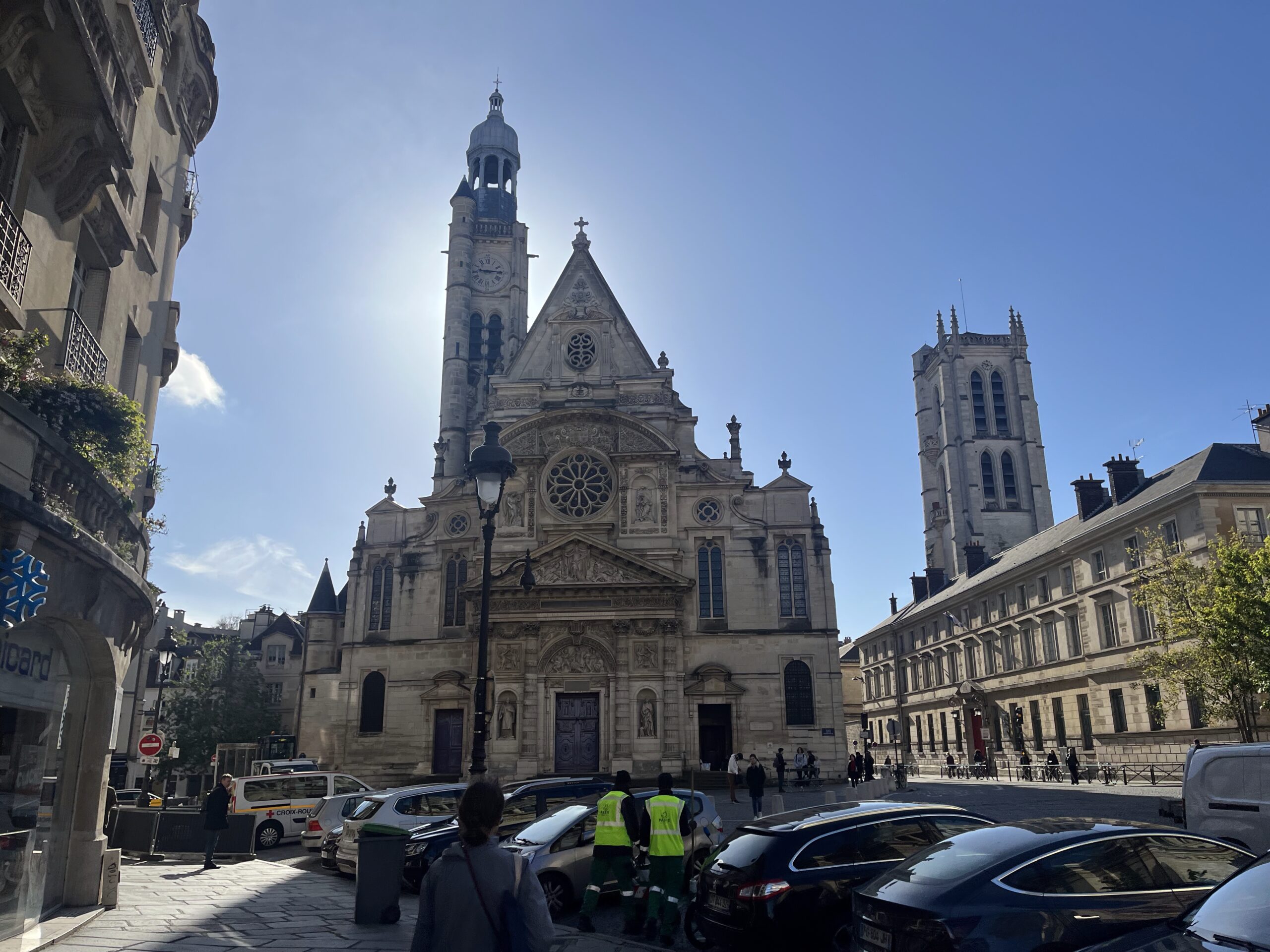
Last month, a new evangelical church was born in the 5th arrondissement of Paris, one of the most consequential neighborhoods in the postmodern West. The neighborhood is in the oldest part of the city, featuring Roman ruins enmeshed within Baroque-lined streets. Its history is robust, its layered culture rich. This is a place where common grace abounds, and the sights, smells, and sounds unite in a romantic harmony. In the heart of the 5th sits the Sorbonne, the fountainhead of French intellectualism for the better part of the last eight centuries— university that has produced the likes of Jean-Paul Sartre, Simone de Beauvoir, Dr. Seuss, and a few Nobel Laureates.
The legacy of the 5th continues, as it still plays a significant role in shaping modern Western thought. Today, the religious “drumbeat” of this arrondissement is the alluring call of expressive individualism. If the contemporary mantra, “live your truth,” needed to find its way home, to the 5th it would return. The neighborhood is ground zero in the quest for self-satisfaction, and its residents desire the rest of the world to join their march. The sound is enticing! Undoubtedly, you have heard it in your city: “be true to yourself,” “live your truth,” “you do you,” and “follow your dreams.” It is the call to satiate the innately good, yet twisted, longings for purpose, identity, and belonging that are emblazoned in the imago Dei— pursuit that can only find its sensible end through a Creator who subversively fulfills[1] these longings in Christ.
In 2025, the people of the 5th are tired, lonely, and parched from the moral disarray around them. The mantras of the age have not and cannot satisfy. The people of the city are waiting for someone to come—a Rescuer, someone who will reach them through the beautiful feet of those who carry a vision for the “City of God.”[2] But how can they believe if they have not heard, and how can they hear if no one goes (Romans 10:14)?
Truth, Goodness, and Beauty
L’Eglise de la Montagne, which is housed in an old cinema, is the first evangelical church in more than a decade to launch with an intentional vision to reach Paris’s 5th arrondissement. The question of context looms large for the core team: Will secular Parisians embrace a sacred religion at a cinema in the land of Gothic cathedrals? They are reminded of a beloved sister church in another strategic neighborhood, the 9th arrondissement; Église Saint-Lazare is packing out a classic cinema every week.
Launch Sunday is here, and lead planter Philip Moore is confident his Lord will provide. He stands at the entrance of the cinema, black rimmed spectacles and warm grin, welcoming in the steady flow of guests into a lobby permeated with the sweet smell of pastries and coffee. His team greets attendees with joyful anticipation. As the theater begins to fill, the historical gravitas of the moment sets in. The Protestants of old were persecuted to extinction on these very streets. John Calvin’s vision for France to be flooded with new churches comes to mind. If only he could witness this moment—his old college town with a vibrant, new, gospel-preaching church. The seed of a faithful legacy[3] bearing fruit over 460 years later.
Soon, conversation quiets as the music begins, not an open seat to be found in the bustling theater. Praises ascend in French, with songs of grace, hope, and the glory of Christ. Then a powerful moment: a handshake between the pastor of the sending church and Philip, vivid reminder in the modern missions era that it is churches that plant churches, and that out of this exchange flows meaningful partnership, sending and receiving (Phil. 4:15), giving and going.
Philip preaches about truth, goodness, and beauty, and how each finds its fullest expression in God through Christ[4]— a fitting message for Parisians who are proudly shaped by the wonder and beauty of their city and deeply aware of the culture they’ve made and shared around the world. The tension of the sermon builds as 160 listeners consider how the common grace of their city has a stunning horizon that begins and ends with the completed work of Christ. The many who have never heard or believed the gospel listen intently, as this news begins to shape their imagination with an invitation to enter His story through repentance and faith. The truest story ever told, the good news of Jesus now echoes (1 Thess. 1:8) into the beautiful, ancient streets of the 5th.
A City of Light
There is a hopeful sense among French evangelicals that a new day is dawning for the advance of the gospel in the city of Paris. The radiant beauty of Christ is certainly shining through church plants like Église de la Montagne, from arrondissement to arrondissement. We can know with confidence that God isn’t finished yet. He desires the people of the French-speaking world to know him (1 Tim. 2:4). Let us pray that He will continue to spread His fame through faithful churches in one of the world’s most impactful cities.
[1] Daniel Strange, For Their Rock Is Not as Our Rock: An Evangelical Theology of Religions (Nottingham: Apollos, 2014), 124–130. Strange describes “subversive fulfillment” as the dynamic by which the gospel simultaneously confronts and connects with the religious and cultural narratives of a people. This pursuit affirms what is true while exposing and redirecting what is idolatrous.
[2] Augustine distinguishes the civitas terrena (earthly city) from the civitas dei (City of God), two rival orders, one shaped by self-love and temporal goods, the other by God’s eternal truth and love (see The City of God, Book XIV).
[3] Michael A. G. Haykin, “John Calvin’s Missionary Influence in France,” Reformation and Revival 10, no. 4 (2001): 41–42. Haykin notes that by 1562 more than 2,000 Protestant churches had been planted in France, many through the efforts of Geneva trained missionaries under Calvin’s global vision of gospel advance.
[4] From his launch sermon at L’Église de la Montagne, Philip Moore described the church’s vision this way: “We want to be … a church in the 5th arrondissement, for the 5th arrondissement; a church where everyone can encounter God through Jesus Christ; a church where we live out the three values we have chosen for our church: truth, beauty, and goodness. We believe that when we understand the truth about God, we see him as he is—perfect beauty and goodness—and that this experience allows us to live out truth, beauty, and goodness in our everyday lives.”